Building a Villa in Marbella: Permits, Costs and Timeline
Marbella continues to attract international buyers who would rather build a villa to their own specification than adapt someone else's. Building in Spain, however, follows a different sequence from the UK, Northern Europe or the US. The roles are divided differently, the paperwork is different, and the planning process sets the pace for everything else.
This guide covers the whole process, from checking a plot before you buy to the documents you need at handover. It includes realistic timeframes, the costs owners tend to overlook and the mistakes we see most often on the Costa del Sol.

At a glance
A new villa in Marbella needs a major building licence (Licencia de Obra Mayor) from the town hall, based on a project drawn up by a registered architect.
Typical phases: design and planning 3–6 months, licence approval 4–8 months, construction 12–18 months.
In 2026, construction costs typically range from around €1,800/m² for a standard specification to €3,500/m² for high-end finishes. These figures exclude the plot, professional fees and exterior works.
Foreign buyers can legally buy land and build a home in Spain.
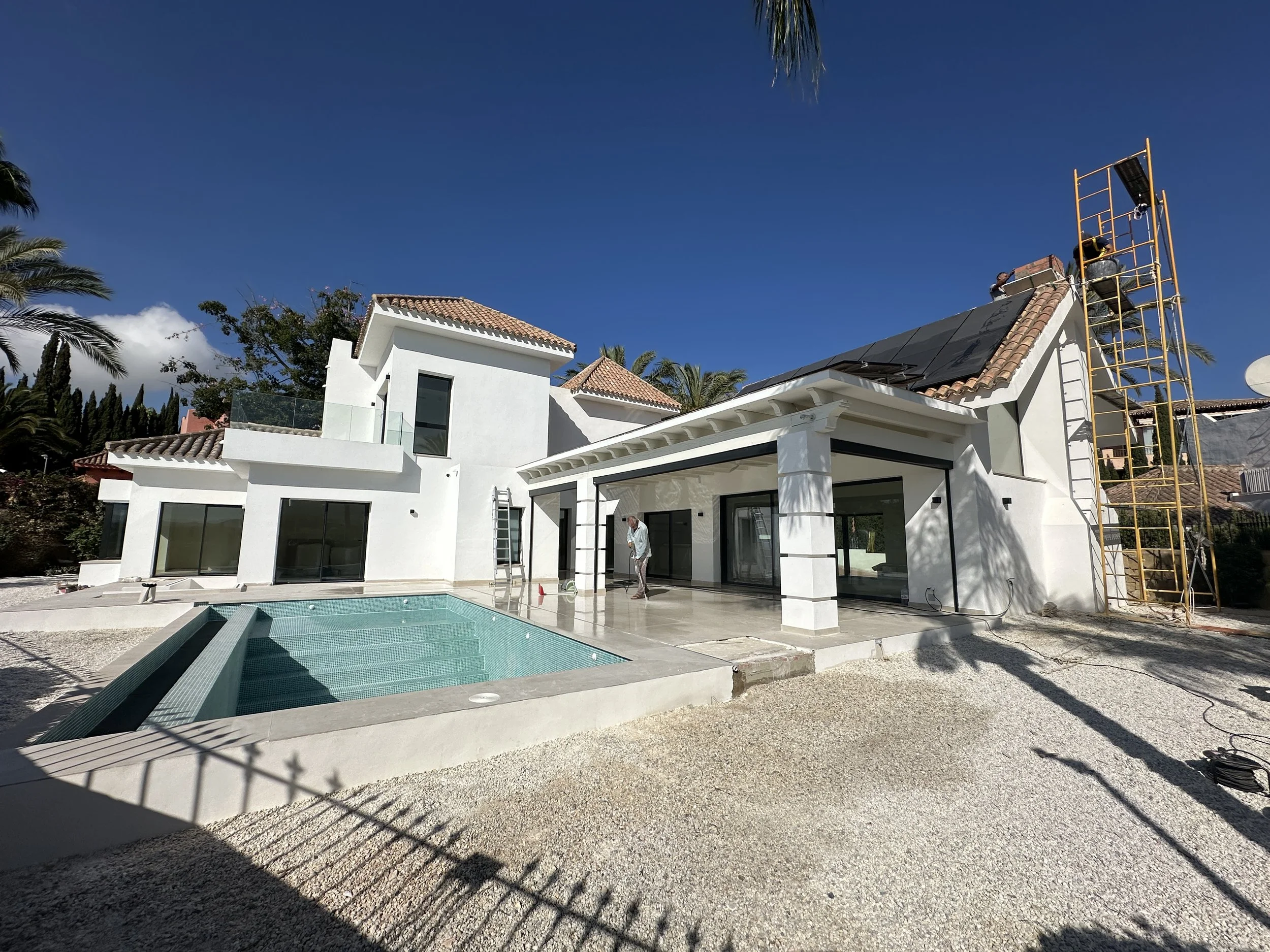
Step 1: Start with the plot and do your due diligence
The plot determines what you can build, how much it will cost and, to a large extent, how long approval will take. Before signing anything, request a certificado urbanístico (urban planning certificate) from the town hall. It confirms how the land is classified and which planning parameters apply, in other words what you can legally build on it.
Planning rules are set by each municipality. A plot in Marbella is not governed by the same parameters as one in Benahavís, Estepona or Mijas, even when the two sit only a few kilometres apart.
A proper feasibility study at this stage should look at:
buildable area and permitted height
setbacks, orientation and views
access for machinery, utilities and services
topography and ground conditions
an early estimate of construction costs
A cheaper plot does not always mean a cheaper project. Sloping sites, common in the hills above Marbella and Benahavís, often need more excavation, retaining walls and more complex foundations, all of which can shift the budget considerably. Before you commit, our property survey service can help you understand what you are buying.

Step 2: Bring in the architect and the builder early
In Spain the roles are clearly separated. The architect designs the villa and prepares the technical project, which covers the concept design, structural calculations, building systems and energy-efficiency compliance. The builder then carries out the work.
The two need to work together from the outset. Involving the builder before the plans are finalised helps catch details that are expensive or impractical to build, and keeps the design aligned with the budget. Choose both on experience, communication, transparency and local knowledge rather than price alone.
For international owners, working with an English-speaking team keeps decisions clear at every stage, from design meetings to technical queries on site.
Step 3: Building permits in Marbella
Do you need a building permit to build a villa in Marbella?
Yes. Every new villa requires a major building licence (Licencia de Obra Mayor) from the local town hall. The same applies to extensions and structural alterations. The application is normally supported by:
an architectural project prepared by a registered architect
structural engineering calculations
the required technical reports
confirmation that the project complies with local planning rules
The town hall reviews the documentation before granting the licence, and construction cannot legally begin until it has been granted. We can manage the building licence application on your behalf.
If you are renovating rather than building, the route depends on the scope of work. Our guide to renovating a villa in Marbella covers it in detail.
How long does licence approval take?
Allow around 4–8 months, depending on the municipality, its workload and how complete the application is when submitted. Incomplete documentation is one of the most common causes of delay.
The waiting period does not have to be wasted. It is a good time to finalise interiors, installations and kitchen design, so that decisions are made before work starts rather than under pressure on site. Avoid fixing a move-in date too early and leave a margin in your plans.

Step 4: Budget for more than construction
How much does it cost per square metre?
As a guide, construction costs in Marbella in 2026 range from around €1,800–€2,200/m² for a standard villa to €2,500–€3,500/m² for a high-end specification. Ultra-luxury projects start from around €4,000/m². These figures cover construction only. For a full breakdown, including a worked example for a 400 m² villa, see our guide: How Much Does It Cost to Build a Luxury Villa in Marbella?
What moves the budget
Plot conditions: slopes, rock and access all affect excavation and foundations.
Architectural design: large glazed façades, basements and bespoke layouts add structural complexity.
Materials and finishes: the largest variable once the structure is built.
Exterior features: swimming pools, landscaping, terraces and outdoor kitchens.
Technology: home automation, solar and energy systems.
Costs foreign buyers often forget
architect and technical fees, typically around 8–12% of the construction cost
licence fees and municipal taxes
notary and legal costs
project management
exterior works such as gardens, boundary walls and driveways
furniture and interior fit-out
Ask for a complete, itemised estimate rather than a price per square metre or a verbal quote. An itemised estimate shows exactly what is included, and what is not, before you commit.
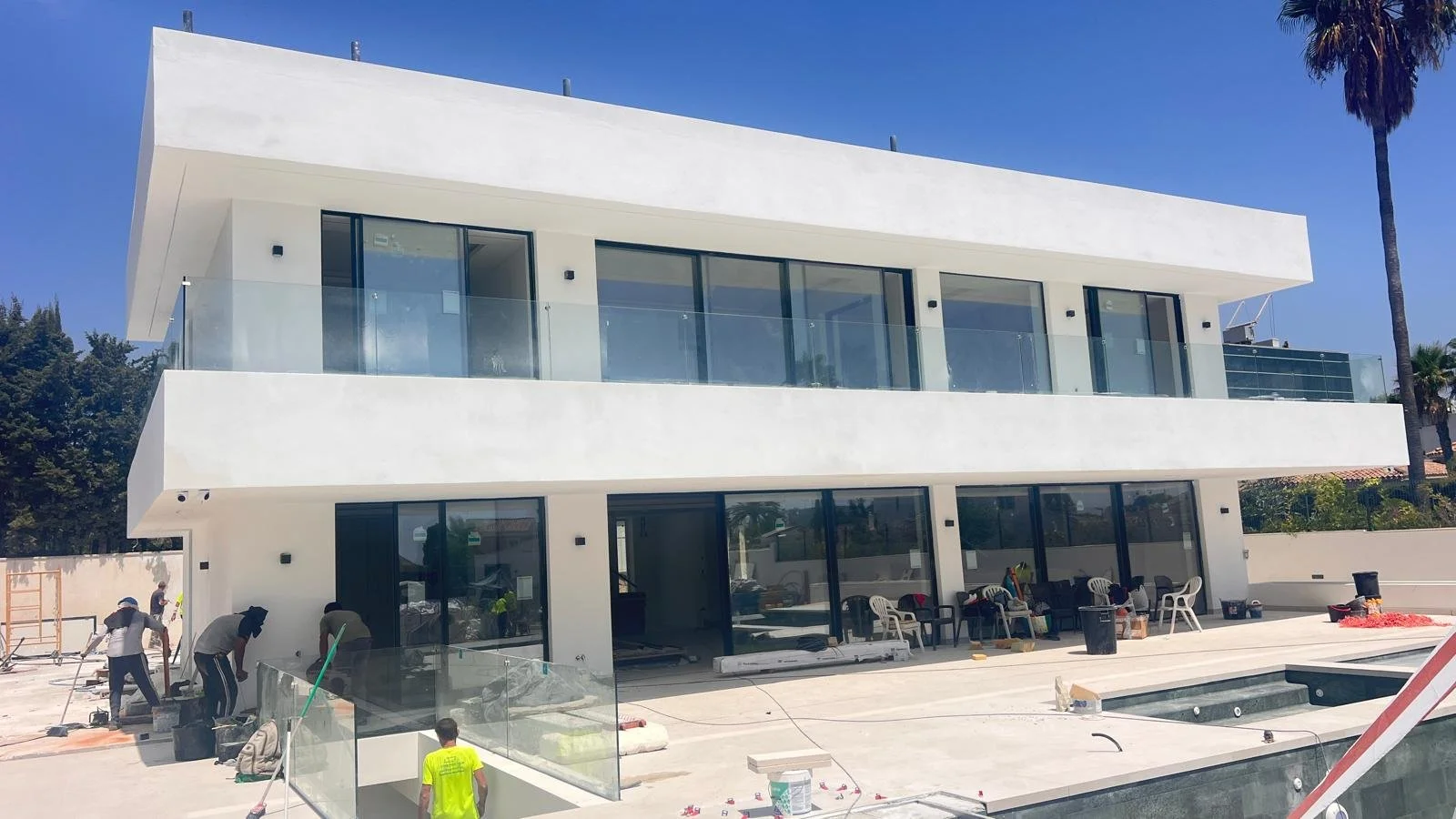
Step 5: Construction and project management
Construction typically takes 12–18 months, depending on the size and complexity of the villa, the availability of materials and how well the trades are coordinated. Good project management keeps four things under control: quality, budget, schedule and the coordination between architect, engineers and trades.
Managing your villa build from abroad
Many of our clients do not live in Spain while their villa is being built. You can stay closely involved without being on site every week. Expect:
regular progress reports with photographs
staged financial certifications showing the work completed and invoiced
video calls to review progress and decisions
Plan your visits around the key milestones: excavation, completion of the structure, the stage before finishes go in, and final snagging.
Choosing materials and finishes
Finishes affect more than appearance. They determine how the villa copes with strong sun, coastal humidity and heavy seasonal rain, and how easily it can be maintained. Availability matters too. Local suppliers are usually more reliable than importing everything from abroad, where shipping delays can add weeks to the programme.
Step 6: Handover and life after completion
Before handover, the villa goes through final inspections and snagging. Make sure your documentation is complete:
first occupation documentation (commonly known as the LPO, Licencia de Primera Ocupación)
energy performance certificate
warranties for the building and its installations
manuals for all systems and equipment
Without valid occupancy documentation, connecting utilities or selling the property later can become difficult. Ask about aftercare and post-completion support before you sign the construction contract, not after.

How long does it take to build a villa in Marbella?
Phase Typical duration Design and architectural planning 3–6 months Building licence approval 4–8 months Construction 12–18 months
Construction cannot start until the licence has been granted, so these phases largely run one after another. Plan with a margin rather than a fixed move-in date. The final timeline depends on the municipality, the complexity of the design, the availability of materials and the coordination between everyone involved.
Common mistakes when building a villa in Spain
Choosing the cheapest contractor. Low quotes often leave out items that reappear later as extras.
Skipping the feasibility study. Problems with the plot are far cheaper to find before purchase than during excavation.
Underestimating approval times. Fixed dates set before the licence is granted rarely hold.
Poor coordination between architect and builder. It leads to redesigns, delays and disputes.
No local knowledge or project management. The usual result is overruns, inconsistent quality and decisions made without the full picture.
Why many international owners choose turnkey construction
With a turnkey construction company, you have one contract and one point of contact for the whole project. Technical coordination, licensing, construction, budget control, quality supervision and final delivery all sit with a single team. For owners who live abroad, it is often the most practical way to build in Marbella with confidence. Find out more about our construction services.
Frequently asked questions
How much does it cost to build a villa in Marbella per square metre?
As a guide for 2026, from around €1,800/m² for a standard specification to €3,500/m² for high-end finishes, and from €4,000/m² for ultra-luxury projects. These figures cover construction only, not the plot, professional fees or exterior works.
How long does it take to build a villa in Marbella?
Allow 3–6 months for design, 4–8 months for licence approval and 12–18 months for construction. Because these stages largely run in sequence, it is wise to plan with a margin.
Do you need a building permit to build a villa in Marbella?
Yes. A new villa requires a major building licence (Licencia de Obra Mayor) from the town hall, based on a project prepared by a registered architect.
What is a certificado urbanístico and why do I need it?
It is an urban planning certificate issued by the town hall. It confirms how a plot is classified and which planning parameters apply. Request it before buying land so you know exactly what you can build.
Can foreigners build a villa in Spain?
Yes. Foreign buyers can legally buy land and build a home in Spain.
Can I manage a villa build in Marbella from abroad?
Yes, with the right reporting in place: regular progress reports and photographs, staged financial certifications, video calls and site visits at key milestones.
Is it cheaper to build or to buy a villa in Marbella?
It depends on the plot, the specification and the market at the time. Building takes longer, but it gives you full control over design, materials and performance, which many owners value over the long term.
Planning to build a villa in Marbella or Benahavís? Talk to us before you buy the plot. We can review its feasibility, give you a realistic picture of timescales and prepare a detailed quote. Contact our team to discuss your project.